
Cinder Blocks: Are They the Ultimate Eco-Friendly Building Solution? Environmental Impact & Sustainability Exposed!
In the current world with a huge demand for eco-friendly building materials, it’s important to understand the environmental impact of construction materials such as cinder blocks. These materials are widely used for constructing homes and buildings but how eco-friendly are they? This article will discuss the sustainable building materials landscape and give some insights on cinder block sustainability.
What Are Cinder Blocks and Their Role in Eco-Friendly Construction?
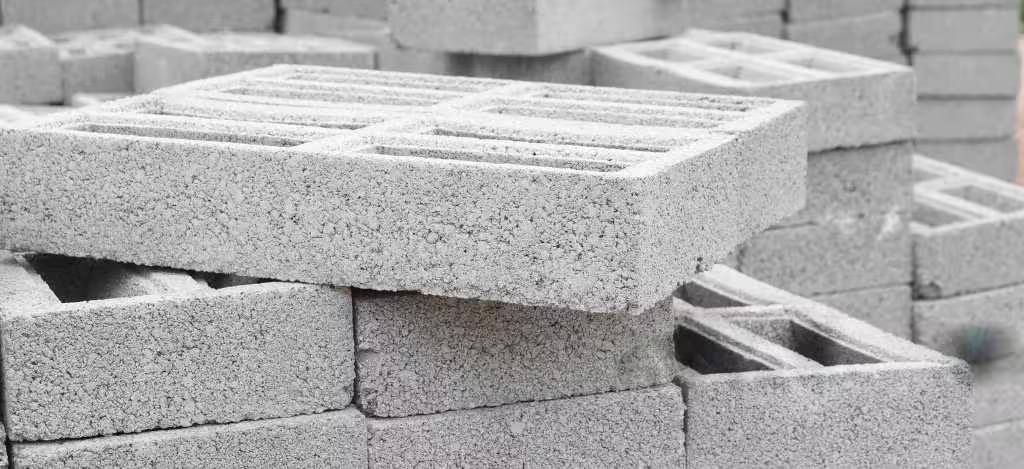
Cinder blocks also called concrete blocks are manufactured from a mixture of cement, sand, water and sometimes recycled aggregates. They are durable, cost-effective and versatile which makes them a popular choice for energy-efficient buildings. However, their production and use are causing concerns due to their carbon footprint and overall environmental impact.
The thermal mass of concrete blocks helps them to regulate the temperature within a building, which helps to create energy-efficient buildings by decreasing the need for heating and cooling systems. This characteristic along with cinder block sustainability makes them a viable option for eco-friendly construction if they are used correctly.
The Environmental Impact of Cinder Blocks: Cement Production & Beyond
While cinder blocks have some advantages in terms of sustainability, the environmental impact of the blocks cannot be ignored. A significant contributor to the environmental footprint of these blocks is the production of cement, which is the main ingredient that is used to make them. Cement production accounts for about 8% of the world’s CO2 emissions and is therefore one of the largest sources of greenhouse gas emissions in the construction industry.
The energy-intensive process of producing cement releases the carbon dioxide (CO2) into the atmosphere. This increases the carbon footprint of concrete blocks greatly. Although cinder blocks are strong and can endure for many decades, the initial cost to the environment in making them is high. However, there are ways of reducing this impact by using recycled concrete and other materials.
How Can Recycled Materials in Construction Make Cinder Blocks More Sustainable?
To make cinder blocks more eco-friendly, many cinder blocks manufacturers are looking to recycled materials used in construction. Fly ash concrete, for example, uses fly ash, which is a byproduct of coal-burning power plants, as a replacement for some of the cement content in the concrete. Fly ash in construction not only helps in reducing the amount of cement required, but also helps to divert waste from landfills, thus contributing to the circular economy.
Additionally, recycled aggregates (crushed concrete) can be used in place of natural aggregates for cinder blocks. This process requires less mining and extraction of raw materials further lowering the environmental impact of concrete blocks. By using recycled materials, the carbon footprint of these blocks is decreased and they are a more sustainable choice.
Recycled Concrete and Concrete Recycling
Concrete recycling is an important practice that can help to reduce the environmental impact of construction. Old concrete can be crushed and reused in new concrete blends as aggregate, which decreases the requirement for natural resources and the amount of construction waste produced. This form of recycled concrete is not only resource-conserving, it also reduces the consumption of energy used in construction as transportation and extraction of new aggregates is reduced.
Cinder Blocks and Green Building Practices: A Step towards Sustainability
Using sustainable concrete for eco-conscious building materials is important for minimizing the overall environmental impact of building materials. Many of the green building practices include the choice of materials that are not only durable, but also energy-efficient and recyclable. Cinder blocks can fit well into the green building practices if right material and technique are used.
Incorporating modular construction with cinder blocks are also another way to increase sustainability. This technique is done by making components in advance and assembling them at the site, minimizing construction waste and increasing efficiency. By reducing waste and using recyclable building materials, modular construction involves a more sustainable approach to building design.
The Role of Fly Ash in Construction and Its Environmental Benefits
Fly ash has become one of the most effective eco-conscious building materials in the recent years. When used as a partial replacement for cement, fly ash concrete reduces the CO2 emissions in cement production. This is a huge step towards reducing the impact of cinder block and concrete block on the environment.
Studies have shown that the use of fly ash in place of even a small percentage of cement will lead to a reduction of energy consumption in construction work while increasing the durability of concrete. Moreover, fly ash in construction has a much lower environmental impact compared to traditional cement which contributes much to global warming.
Reducing Carbon Footprint with Recycled Concrete and Greenhouse Gas Emissions
One of the main cinder blocks environmental benefits is the cinder block’s ability to reduce the emissions of greenhouse gases over time. Their thermal mass helps control the indoor temperatures (i.e., less energy is needed to heat or cool buildings). As a result, the overall carbon footprint of buildings built using cinder blocks is reduced.
By using recycled concrete in the production of cinder blocks, we can reduce CO2 emissions from cement production by a large amount. This closed-loop process not only saves the construction industry from raw material waste but also helps to divert construction waste from landfill, making the construction industry more sustainable.
Sustainable Concrete: The Future of Eco-Friendly Building Materials
The future of sustainable concrete is in the use of alternative materials and technologies to minimize the environmental impact of cinder blocks. As the demand for sustainable construction increases, new innovations are helping to improve the sustainability of building materials. For instance, geopolymer concrete has been coming up as a solution to replace conventional cement that has a higher carbon footprint and is more durable.
The energy consumption in construction can also be cut down by adopting the practice of green building, and choosing materials that are not only sustainable but also energy-efficient. Using Thermal Mass to control the temperature naturally is one of these practices that can help reduce the environmental impact of a building as much as possible.
How Cinder Blocks Can Help Achieve Circular Economy Goals in Construction
The concept of circular economy plays an important role in achieving sustainable construction. By the use of recycled aggregates and fly ash concrete, cinder blocks are a part of a more sustainable cycle of materials. These blocks can be re-used, recycled and re-purposed, as opposed to new raw materials, conserving resources for future generations.
Through recycling and using recyclable construction materials, the construction industry can get closer to its sustainability goals. Cinder blocks, if used in sustainable mode, help promote circular economy in the construction industry.
Frequently Asked Questions (FAQs)
Q1: Are Cinder Blocks Eco-Friendly?
Answer: Yes, cinder blocks can be considered eco-friendly, if they are made by sustainable means. Manufacturers are now using recycled materials in construction such as fly ash concrete and recycled aggregates to lower the carbon footprint of traditional cement production. Additionally, thermal mass properties of them contribute to energy-efficient buildings resulting in lower energy consumption over time.
Q2: How Do Cinder Blocks Impact the Environment?
Answer: The production of cinder blocks involves the production of cement which is a significant contributor of greenhouse gas emissions. However, by using recycled concrete and other materials such as fly ash, the environmental impact can be reduced. These practices are conducive to promoting a circular economy because of reducing waste and natural resources.
Q3: Can Cinder Blocks Be Recycled?
Answer: Yes, cinder blocks can be recycled. From recycling to aggregate reuse, these can be crushed and reused as recycled aggregates in new construction projects, ensuring the reduction of construction waste and reducing the need for new raw materials. This process is in line with sustainable concrete practices and correlates with the principles of a circular economy.
Q4: Do Cinder Blocks Contribute to Energy-Efficient Buildings?
Answer: Absolutely. The thermal mass of cinder blocks means they will absorb and store heat to help regulate the temperature of the room they are in. This characteristic results in less artificial heating and cooling, resulting in energy-efficient buildings and energy savings at construction sites.
Q5: What Are the Benefits of Using Cinder Blocks in Sustainable Construction?
Answer: Cinder blocks have a number of benefits when used in eco-friendly construction:
- Durability: They last long as they have a good life span, saving on the number of replacements.
- Recyclability: Made from recycled materials and thus they can be reused for circular economy.
- Energy Efficiency: Their thermal mass properties are responsible for the energy-efficient buildings.
- Cost-Effectiveness: They are more often than not, cheaper than other building materials.
By opting for cinder blocks, builders can help to create a sustainable source of building materials and help to minimize the overall impact on the environment of construction projects.
Conclusion: Are Cinder Blocks Eco Friendly?
Cinder blocks can be considered eco-friendly if used in the right way. While their production does have an environmental impact, the use of recycled materials, such as fly ash, and recycled aggregates, can go a long way towards reducing their carbon footprint. Green building practices, modular construction and energy-efficient buildings further contribute to the cinder blocks as a building material’s sustainability.
If you are planning on a construction project and want to make an environmentally conscious choice, then consider going for cinder blocks made with sustainable concrete and recycled materials. By adopting these practices, we can minimize the overall environmental impact of construction and play a part in a more sustainable future.
Explore More Calculators
Looking for more handy tools? Try these other calculators from MegaToolCalculator.com:
- Cinder Block Calculator
- Lap Day Calculator
- Rucking Calorie Calculator
- Board Foot Calculator
- Batting Average Calculator
- Topsoil Calculator Calculator
- Chronological Age Calculator
- Exponential Growth Calculator
- mg to ml Calculator
- Percent Error Calculator
- Reverse Sales Tax Calculator
Discover even more tools in our All Calculators section.